 CALL US NOW (616) 820-5997
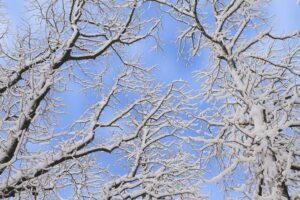
Should You Shake Snow Off Tree Branches?
Michigan winters bring beautiful snowfall, but they also bring a common question for homeowners:
Should you shake snow off your tree branches, or leave them alone?
The short answer is: sometimes yes, often no. Doing the wrong thing at the wrong time can actually cause more damage than the snow itself. Here’s how to know what’s safe, what’s risky, and what to do instead.
Why Snow Can Damage Trees
Snow becomes a problem when it’s heavy, wet, or icy. As it accumulates on branches, it adds significant weight. Trees that are already stressed due to age, poor structure, or previous damage, are especially vulnerable.
Common winter tree issues include:
- Bent or drooping limbs
- Cracked branches
- Split trunks
- Complete limb failure
Evergreens are often hit hardest because their needles catch and hold snow, while trees with multiple upright leaders can split under uneven loads.
When It’s OK to Gently Remove Snow
In certain situations, light snow can be safely removed, but only with care.
You can gently remove snow if:
- The snow is light and fluffy (not icy or wet)
- Branches are low enough to reach safely from the ground
- You use a soft tool, like a broom, and brush upward from the underside of the branch
The goal is to let gravity help the snow fall away without forcing the branch downward.
When You Should NOT Shake or Hit Branches
Most winter damage happens when people try to help.
Avoid removing snow if:
- The snow is frozen or icy
- Branches are stiff and brittle due to extreme cold
- Limbs are high, heavy, or already bent
- You’re tempted to shake, yank, or hit the branch
In freezing temperatures, wood loses flexibility. Shaking a branch can cause it to snap instantly or tear where it meets the trunk, damage that often isn’t fully visible until spring.
Why Shaking Branches Is Risky
Shaking may seem harmless, but it creates sudden movement and stress in frozen wood. This can lead to:
- Hidden fractures
- Bark tearing at branch unions
- Structural weaknesses that fail later
Many storm-related tree failures in Michigan actually begin with micro damage caused by improper snow removal.
What You Should Do Instead
If snow buildup looks concerning, the safest approach is often to do nothing and let the snow melt naturally.
Other smart steps include:
- Keep people, cars, and pets away from heavily loaded branches
- Watch for new cracks or splitting sounds (these are warning signs)
- Address structural issues before winter with proper pruning
Preventative pruning reduces snow load and wind resistance long before storms arrive.
What About Ice?
Ice is a different story.
Never attempt to remove ice from branches. Ice bonds tightly to bark and adds extreme weight. Any attempt to remove it manually almost always results in breakage.
If ice accumulation is severe, it’s best to wait, or contact a professional once conditions are safe.
Final Takeaway for Michigan Homeowners
- ✅ Light, fluffy snow on reachable branches can be gently brushed off
- ❌ Do not shake, hit, or pull branches, especially in extreme cold
- ❌ Never try to remove ice
- ✅ Prevention through proper pruning is the best protection
If you’re unsure whether a tree is at risk, it’s always safer to leave it alone than to cause damage trying to help.
Winter tree damage often shows up months later, so careful decisions now can save trees (and repair costs) come spring.